- Home
- Blog Details
Arctic Methane Threat: Permafrost Thaw in Svalbard Unveils Hidden Risks
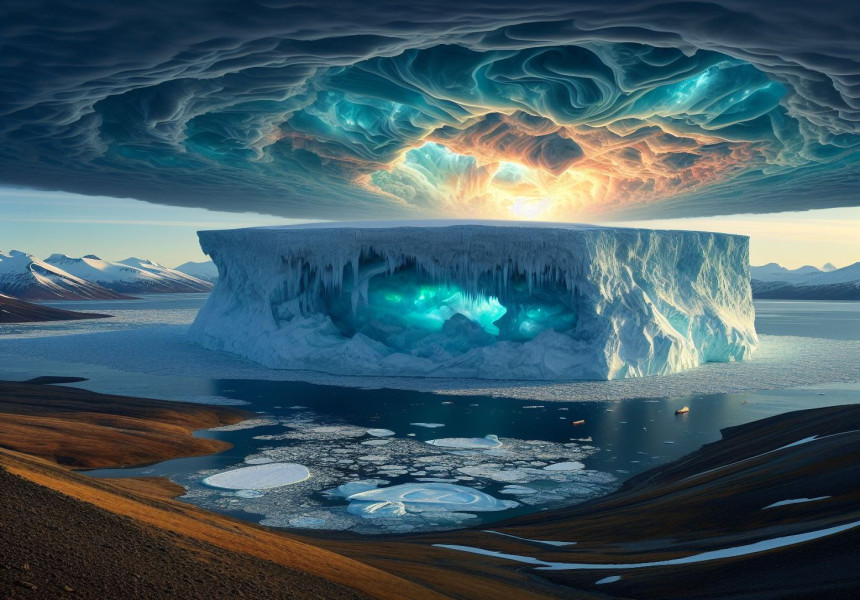
Arctic permafrost, undergoing a thaw due to rising temperatures, is concealing a hidden danger: substantial reserves of methane, a potent greenhouse gas. Scientists, referring to it as the "methane monster," are uncertain about its full impact but express concerns about its potential release. A recent exploration of Svalbard, a Norwegian archipelago in the Arctic Ocean, revealed methane deposits deeper and closer to the surface than anticipated, intensifying worries about a potential rapid release and its global implications. The Arctic's frozen ground contains a ticking time bomb, prompting scientists to urgently investigate its threat.
Unveiling the "Methane Monster:
The thawing of Arctic permafrost, attributed to escalating temperatures, brings attention to the lurking threat of massive methane stores, colloquially termed the "methane monster." Researchers, focusing on Svalbard, discovered methane deposits at shallower depths than expected. This unexpected finding raises alarms about the possibility of a swift release, with potential far-reaching consequences for the planet. The geological and glacial similarities between Svalbard and the broader Arctic region suggest that similar methane deposits may exist elsewhere in the Arctic.
Concerns and Future Scenarios:
Dr. Thomas Birchall of the University Center in Svalbard, the lead author of the study published in Frontiers in Earth Science, highlighted the significance of methane as a potent greenhouse gas. While current leakage from below permafrost remains low, factors such as glacial retreat and permafrost thawing could trigger increased emissions in the future. The Arctic region's permafrost, once considered a stable carbon reservoir, is now viewed as a dynamic element with the potential for substantial methane release.
Widespread Gas Accumulations:
The researchers emphasized that gas accumulations were more widespread than initially anticipated. In Svalbard, where 18 hydrocarbon exploration wells were conducted, eight revealed signs of permafrost, and half of these encountered gas accumulations. The prevalence of these accumulations, discovered incidentally during exploration, is raising concerns about the frequency of such instances.
Birchall stated, "These things seem to be common. One anecdotal example is from a wellbore that was drilled recently near the airport in Longyearbyen. The drillers heard a bubbling sound coming from the well, so we decided to have a look, armed with rudimentary alarms designed for detecting explosive levels of methane—which were immediately triggered when we held them over the wellbore." The unexpected nature and frequency of these gas accumulations underscore the urgent need for further research into the potential risks associated with thawing permafrost in the Arctic.