- Home
- Blog Details
This piece explores the cutting-edge progress in regenerative medicine, specifically focusing on the remarkable strides made in robotics.
In 1999, Haseltine defined regenerative medicine as a comprehensive set of interventions aimed at restoring damaged tissues and organs to their normal function, encompassing chemical, gene, and protein-based medicines, cell-based therapies, and biomechanical interventions.
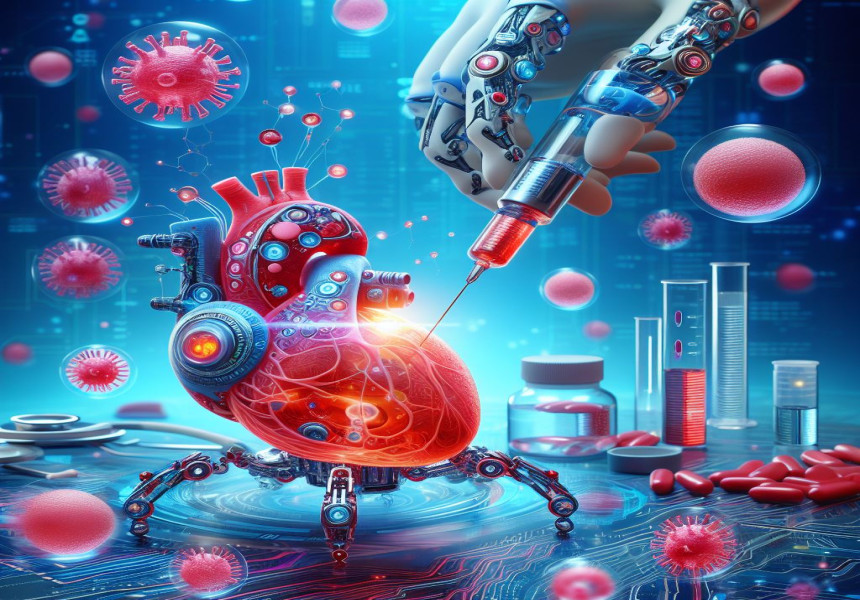
The spotlight of this article is on anthrobots, or biobots, as elucidated in a recent study led by Dr. Gizen Gumuskaya and his team at Tufts University. These biobots, derived from human lung cells, represent a groundbreaking advancement due to their minuscule size, ranging from 30 to 500 micrometers in diameter. For perspective, the edge of a penny is over 1500 micrometers.
The transformative potential of these biobots lies in their ability to autonomously repair tissue damage through self-organization . This capability, demonstrated by Gumuskaya and his colleagues, opens up possibilities for various applications in regenerative medicine.
The development of biobots involves isolating human lung cells and transforming them into spheroids. The resulting cell structure, uniformly surrounded by cilia – hairlike strands aiding lung cells in clearing debris – drives the biobots' motility, comparable to legs propelling the cell forward.
These biobots exhibit distinctive motility patterns, ranging from tight loops to straight lines, with speeds ranging from 5 to 50 microns/second. Notably, each biobot maintains a unique motility fingerprint, unlikely to switch patterns once established.
The researchers subjected the biobots to environmental variability, exposing them to damaged somatic tissues. Surprisingly, the biobots successfully traversed simulated scratches on the tissue, showcasing their potential in addressing tissue damage efficiently.
Remarkably, the exposure of biobots to tissue scratches facilitated cellular regrowth. The researchers created a 'superbot' by aggregating biobots, bridging the gap of the scratch. Within three days, native tissue had regrown at an accelerated rate, illustrating the biobots' ability to contribute to tissue repair.
The applications of biobots in everyday medical contexts are diverse. They hold promise for autonomously repairing smaller wounds, drug delivery, and even the potential to locate and eliminate harmful cells, including cancer cells, throughout the body.
While acknowledging the need for years of research and development, Haseltine emphasizes that the rapid pace of innovation in biomedicine heralds a future where the potential of biorobotic micro machines becomes a reality.