- Home
- Blog Details
In the vast expanse of the universe, two profound mysteries have long perplexed scientists: dark matter and dark energy. Together, they constitute approximately 95% of the universe's total mass-energy content, yet their nature remains elusive. Enter the European Space Agency's (ESA) Euclid mission—a groundbreaking endeavor launched to shed light on these cosmic enigmas. Recently, Euclid's inaugural data release has ignited a wave of excitement in the scientific community, promising to revolutionize our understanding of the universe's fundamental components.
The Euclid Mission: An Overview
Launched in July 2023, the Euclid space telescope is designed to map the geometry of the dark universe with unprecedented precision. Its primary objectives are to:
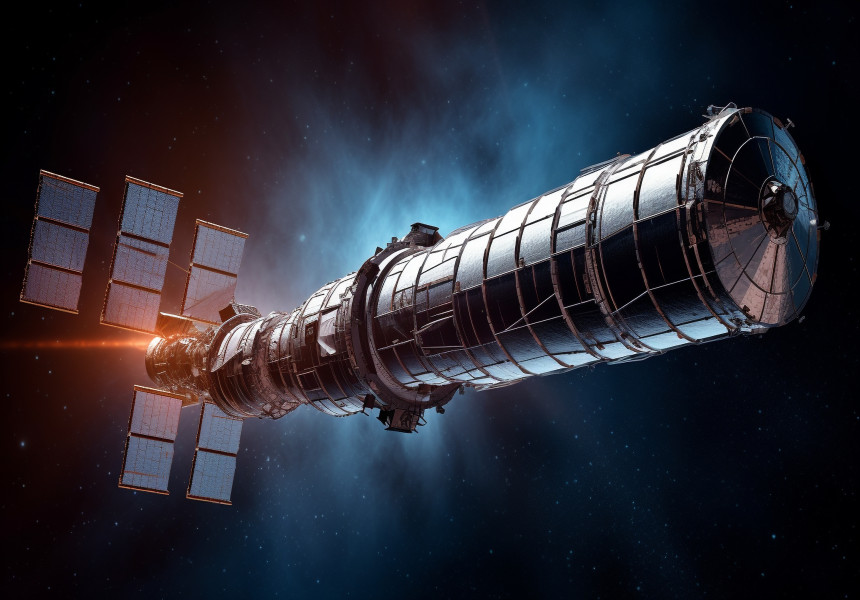
Equipped with a 1.2-meter diameter mirror and advanced instruments, Euclid observes the universe in visible and near-infrared wavelengths, enabling it to capture high-resolution images of billions of galaxies across more than a third of the sky.
First Data Release: A Glimpse into the Dark Universe
The anticipation surrounding Euclid's mission reached a crescendo with the release of its first dataset. This initial trove includes images of 26 million galaxies, some dating back 10 billion years, offering an unprecedented glimpse into the universe's distant past.
Mapping the Cosmic Web
One of Euclid's remarkable achievements is its detailed mapping of the cosmic web—the vast network of galaxies and dark matter that threads through the universe. By observing the distribution and shapes of galaxies, Euclid provides insights into how dark matter influences their arrangement. This mapping is crucial for understanding the large-scale structure of the cosmos and the role dark matter plays in its formation.
Unveiling Gravitational Lensing Events
Euclid's observations have identified approximately 500 strong gravitational lensing events. Gravitational lensing occurs when massive objects, like galaxy clusters, warp the fabric of space-time, bending the light from more distant galaxies. This phenomenon not only confirms predictions made by Einstein's theory of general relativity but also serves as a powerful tool for studying dark matter distribution. The lensing events captured by Euclid allow scientists to infer the presence and concentration of dark matter in lensing galaxies, offering indirect evidence of this elusive substance.
Cataloging Galactic Diversity
The mission has also resulted in the cataloging of 380,000 galaxies, revealing a stunning diversity in their structures and stages of evolution. Among these are galaxies in the process of merging—a critical phase that sheds light on galaxy formation and growth. By studying these interactions, scientists can better understand the dynamics that have shaped the universe over billions of years.
Implications for Dark Matter Research
Dark matter, though invisible, exerts gravitational forces that influence the motion of galaxies and the bending of light. Euclid's high-resolution data enables researchers to create detailed maps of dark matter distribution by analyzing subtle distortions in galaxy shapes—a technique known as weak gravitational lensing. These maps are essential for testing theories about the nature of dark matter and its interactions with visible matter.
Advancing Dark Energy Studies
Dark energy is hypothesized to be responsible for the universe's accelerated expansion. By measuring the redshifts of galaxies—how much their light has been stretched due to cosmic expansion—Euclid helps trace the history of this acceleration. Understanding whether the rate of expansion has changed over time can provide clues about the properties of dark energy and whether it aligns with Einstein's cosmological constant or suggests new physics.
The Road Ahead: Anticipated Discoveries
Euclid's mission is slated to last six years, during which it is expected to capture images of over 1.5 billion galaxies. This extensive dataset will:
Global Collaboration and Data Accessibility
The success of the Euclid mission is a testament to international collaboration, involving thousands of scientists and engineers from numerous countries. To maximize the scientific return, Euclid's data is made publicly available, allowing researchers worldwide to conduct independent analyses, fostering a collaborative environment that accelerates discovery.
Challenges and Technological Innovations
The mission's ambitious goals necessitate overcoming significant challenges, including:
To address these challenges, the mission has spurred technological innovations in areas such as data compression, error correction, and autonomous spacecraft operations, which may benefit future space missions.
Public Engagement and Educational Outreach
Recognizing the public's fascination with cosmic exploration, the Euclid mission includes comprehensive outreach programs aimed at:
These efforts aim to bridge the gap between complex scientific research and public understanding, highlighting the relevance of cosmological studies to our comprehension of the universe and our place within it.

The Euclid space telescope stands at the forefront of humanity's quest to unravel the mysteries of dark matter and dark energy. Its initial findings have already begun to reshape our understanding of the cosmos, offering tantalizing clues about the universe's composition and evolution. As Euclid continues its mission, the scientific community and the public alike eagerly await the cascade of discoveries that will deepen our grasp of the universe's most profound secrets.
Read more: https://www.nasa.gov/missions/euclid/esa-previews-euclid-missions-deep-view-of-dark-universe/